Gaye Anderson, Patron Saint of Seattle Jazz Musicians
AUTHOR: By Dave Holo
Originally Published Oct 2012
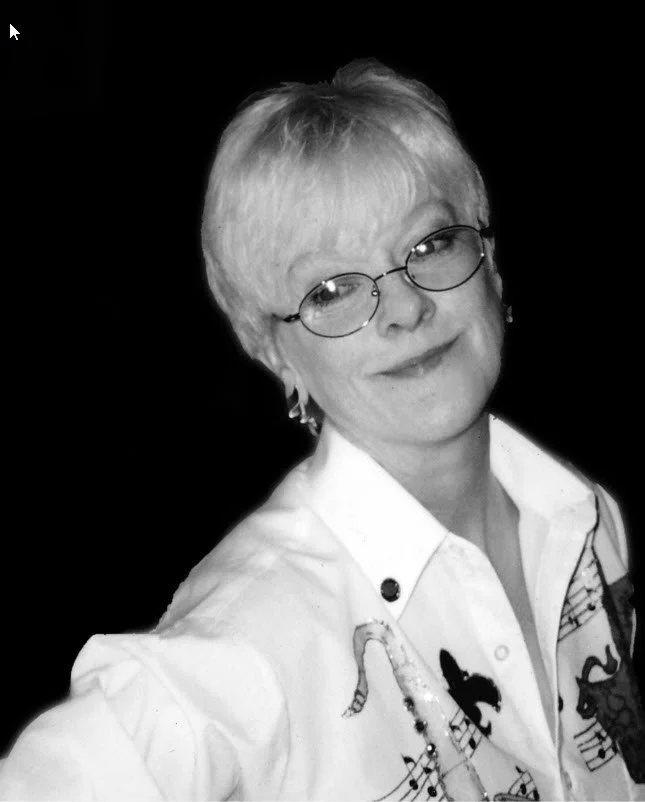
ABOVE: Gaye Anderson
I was first introduced to GayeAnderson and her New Orleans Creole Restaurant the Friday evening of Mardi Gras weekend, 1986. The New Orleans had opened the previous year and was about to participate in its first Mardi Gras celebration. Gaye and her partner Jimmy Allen decided to bring in some live New Orleans jazz to spice things up.
On somewhat short notice, they hired a pickup trio led by Bob Jackson on trumpet. Mike Duffy was on bass. I had the great good fortune to own a banjo and be available when the call came in. The music went over well, we had a good time, and Gaye and Jimmy enjoyed the added ambiance of the music. Only a few weeks later the Bob Jackson Trio with Mike Duffy and Skip McDaniel - a real guitar and banjo player - became the first regular music at the restaurant, playing every Monday, 6:30-9:30. The New Orleans Quintet still occupies the same time slot today. In less than a year, the New Orleans was featuring live music every night. There was jazz Monday through Thursday, and blues on Friday and Saturday, with Sundays a mixed bag. Looking back on it, Gaye and Jimmy’s initial decision to bring in Mardi Gras music permanently rearranged the jazz and blues landscape in Seattle.
In those early years, Gaye was always working to get things just the way that she wanted them. By the time I started working regularly at Gaye’s restaurant in June of 1988 when Jackson left the group, the Monday night band had already become a quartet. George Goldsberry had been added on reeds a few months before my arrival. A few months after my arrival, Bob Gilman came down and sat in on piano one night. Gaye liked the sound of that group and decided we should become a quintet. Musically, she liked it. She wanted that sound in her club. She just did it. If it seemed right, you just do it. Gaye didn’t put much faith in can’t.
During the late 80’s and 90’s, the New Orleans was always hopping. There was music there every night. Every local jazz musician in Seattle was either playing there or trying to get on the calendar. Every blues band in Seattle and on the West Coast wanted to play Gaye’s club. I don’t think I know a musician who hasn’t played at the New Orleans. Gaye hired them, welcomed their friends and fans as though they were family, and created an atmosphere that was unique, comfortable, and a very important part of Seattle’s music scene. Musician friends from all over the world are crazy about the place and are very verbal about how lucky Seattle is to have such a place.
Gaye was also kind of a mover and shaker in the Pioneer Square Business Association and had a big input on the Fat Tuesday tradition, the joint cover, and a lot of other things that made Pioneer Square a destination for music lovers. In the early years, Gaye would gather up all the musicians who could play while mobile, she’d herd us up at Victor Steinbrueck Park behind Pike Place Market, and we’d parade from there down Post Alley all the way to Occidental Park in Pioneer Square with revelers and second liners following us. We’d then play a short concert in Occidental Square and they’d kick off the Mardi Gras festivities. It was crazy, but fun.
There are people who don’t realize that throughout the 1990’s and well into the first decade of the 2000’s, almost every out-of-area traditional jazz band which played PSTJS also played the New Orleans under Gaye’s sponsorship. Gaye’s co-sponsorship helped PSTJS get some out-of-area bands to Seattle which just wouldn’t have been here otherwise. Gaye would hire them to play Saturday afternoon before her regular Saturday night blues bands. On the days she did that, she paid two bands. It didn’t always work out economically, but she believed in the music and wanted to help keep it alive.
Gaye’s general formula was to hire good local musicians and let them fill the place. Even so, during the heydays a number of big names played there. One night Gaye somewhat apologetically told the Monday night guys that she had to take us off the calendar for a week. Dizzy Gillespie would only appear at her club if he could have a Thursday through Monday Are you kidding me? To this day, that’s still one of my best musician stories. I once lost a gig to Dizzy Gillespie. To be perfectly honest, it was a proud moment for me. But even though Gaye was excited to have Dizzy come play at the club, she truly felt guilty for taking us off the calendar for one night.
Gaye was like that. She had respect, appreciation, and loyalty for “her musicians”. I’m sure I played at least a dozen celebrations of life for people who belonged to her New Orleans Restaurant family. When someone you cared about passed on, you gave them a party. That was Gaye’s way. I doubt that it’s a club owners’ custom.
Floyd Standifer, arguably one of the biggest names in Seattle jazz during the last 40 years, played at Gaye’s club every Wednesday night for 20 years. On Floyd’s passing, Clarence Acox took over leadership of that group, and it’s still there every week on Wednesdays. Ham Carson’s Quintet has been there for 20 - 25 years most Thursdays. Ray Skjelbred has been there on First Thursdays for five years. Holotradband has been there on Tuesdays for 9 years. Before that, File Gumbo Zydeco band was there for almost 15 years on Tuesdays. The New Orleans Quintet - descended from the Bob Jackson Trio - is still there every Monday, now in its 28th year. Gaye had a loyalty to her musicians that’s hard to fathom in today’s world. In like fashion, Gaye’s musicians understood that and had the same sense of loyalty to her. We called her the patron saint of Seattle jazz musicians.
Sometimes Gaye and I would sit and chat after the music was over. It was usually about the restaurant, or the musicians she’d known or hired, or about the music. Sometimes it was people we knew in common. Sometimes it was just history. I knew she’d been in the restaurant business a long time. I learned she’d gone to Foster High School where she’d been a gymnast and played the clarinet. I’d met her three brothers and her mom. She knew my family. My dad and my siblings came into the restaurant frequently. My sister brought her kids when they were just little. They still come in. Every time Gaye would see my family walk through the door, she’d seat them, serve them, and unless it was crazy busy, she’d sit down and chat with them for a few minutes. My dad doesn’t get around much these days, but Gaye would ask about him and then say “Well tell him I said ‘hi’, and that he needs to get his rear-end up here and watch you play.” Gaye was like that with a lot of people. She came to a band party or two for the Quintet and friends, but I always got the impression she was most comfortable in her own environment, i.e., the restaurant and jazz joint she’d created. It was what it was because she made it that way. It was much more than a job, a business, or even a livelihood to her. It was a way of life.
The New Orleans Creole Restaurant has been a mainstay of traditional jazz in Seattle for more than 27 years. Even so, I know there are PSTJS members who always intended to get down there but never made it. They never met Gaye or saw her vision of New Orleans jazz in Seattle. I’m sorry about that for Gaye, and for the all the folks who shared her love of the music yet never got around to meeting her or seeing her club.
August 21st, 2012 was the last time I saw Gaye. As usual, I was the last musician to leave after the Tuesday night gig. I was headed for the door, and as I had hundreds of times before, I yelled up to her office “Good night, Gaye. I’m outta here. Have a good week. See you Monday.” She yelled back, as she, too, had so many times before, “OK, love. Drive carefully. Thank you so much.”
It’s hard for me to grasp that she’s gone. Her hand is all over the New Orleans. All the paintings and photographs on the wall … that’s her. The vintage jazz instruments on the wall … that’s her, too. All the Mardi Gras decorations … yup, it’s all Gaye. From the vibe in the room to the outdoor deck she fought city hall to be able to build … that’s all Gaye. She’s still there; I don’t see her leaving anytime soon.